
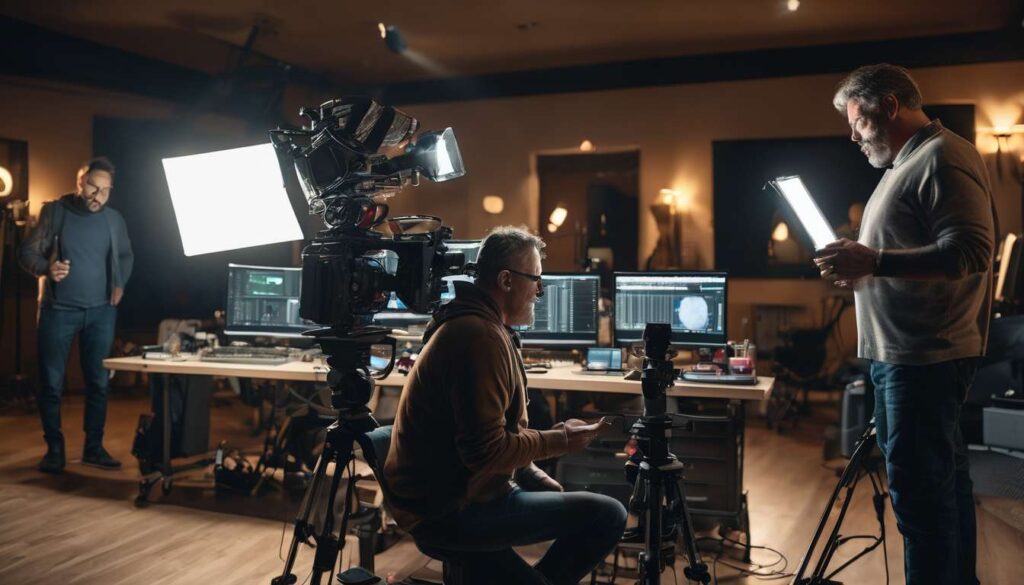
Longer than many assume, the teams behind adult video production resemble the crews of independent films more than the stereotyped lone performer dynamics often portrayed.
We navigate a landscape where directors, editors, sound technicians, makeup artists, writers, marketing strategists, and legal advisors converge, each crafting distinct career pathways with transferable skills and professional growth.
As demand diversifies, roles are expanding into project management, content strategy, technical specialization, and rights management, opening avenues for steady employment and upward mobility.
We confront stigma while cultivating environments that prioritize safety, consent, and fair compensation, translating industry-specific knowledge into broader media careers.
We balance creative ambition with business acumen, leveraging networking and certifications to legitimize expertise.
This article maps the evolving trajectories across production teams, highlights training opportunities, and offers practical advice for those seeking entry or advancement— illustrating how a sector often dismissed as marginal is building robust, sustainable career structures.
Production Roles Overview
Overview — core production roles and collaboration
Producers and line producers: responsible for budgeting, scheduling, and hiring.
Primary tasks:
- Create and manage the production budget.
- Build the shooting schedule and call sheets.
- Hire key crew and coordinate contracts and payments.
Directors: shape the creative vision and guide performers.
Primary tasks:
- Develop shot lists, blocking, and performance direction.
- Communicate artistic goals to crew and performers.
- Ensure the creative intent remains consistent across the shoot.
Production managers: coordinate logistics so everyone feels supported.
Primary tasks:
- Oversee location logistics, permits, transportation, and accommodations.
- Manage on-set operations and troubleshoot issues.
- Facilitate communication between departments.
Camera, sound, and lighting leads: execute technical needs while staying aligned with the director’s intent.
Primary tasks:
- Camera operator and DP: frame and capture shots, maintain continuity.
- Sound mixer/engineer: record clean audio and monitor levels.
- Gaffer and grips: design and implement lighting plans and rigging.
Performers and agents: central collaborators whose comfort is paramount.
Primary tasks:
- Performers: negotiate boundaries, prepare for scenes, and work with the director.
- Agents/managers: handle bookings, contracts, and advocacy for talent.
Consent and safety teams: monitor health, boundaries, and documented permissions on set.
Primary tasks:
- Verify informed consent and keep records of agreed boundaries and releases.
- Oversee testing, health protocols, and on-set well-being.
- Serve as an on-set point of contact for concerns and immediate interventions.
Wardrobe, makeup, and set design: craft a respectful environment that reinforces professionalism.
Primary tasks:
- Wardrobe and makeup: prepare performers, maintain continuity, and address comfort needs.
- Set design/art department: create an environment that supports the scene’s tone and safety.
Post-production (editors and colorists) and distribution/marketing teams: finalize content and ensure ethical, effective release.
Primary tasks:
- Editors: assemble footage, respect agreed-upon cuts and performer boundaries.
- Colorists and audio engineers: polish final deliverables.
- Distribution/marketing: coordinate release strategy, metadata, and compliance with platform policies.
How these roles work together
Key principles that bind the network: clear responsibilities, mutual respect, and shared purpose.
Outcomes:
- A collaborative environment where performers feel safe and supported.
- Predictable workflows that enable steady career paths.
- Ethical production and release practices that protect people and reputations.
Together, these roles form a professional ecosystem in which communication, documentation, and respect create consistent, sustainable adult film production.
Technical Specializations
Creative Departments
Creative departments and their roles
In our creative departments, writers, directors, choreographers, costume and set designers collaborate to shape the film’s aesthetic, narrative, and tone.
We build stories that respect performers and audiences, blending artistry with the practical needs of adult film production.
Teams welcome diverse voices so everyone feels seen and contributes their craft — crafting scenes, refining dialogue, and designing visuals that communicate intent and mood.
Coordination with other departments
We coordinate closely with consent and safety teams to ensure creative choices respect boundaries and logistical realities, while still pursuing compelling, authentic work.
We liaise with distribution and marketing to align creative direction with audience expectations and platform requirements, without compromising integrity.
Career paths and culture
Career paths include:
- Script development.
- Art direction.
- Choreography.
- Creative producing.
We support growth through:
- Mentorship.
- Cross-training to help people move between roles.
We value collaboration, clear communication, and accountability so creatives can take ownership, learn, and belong while advancing both personal skills and the broader goals of the production.
Safety and Consent Teams
We make safety and consent our top priorities, and we staff dedicated teams to ensure clear communication, documented agreements, and on-set well-being for every participant.
We build consent and safety teams that include advocates, medical liaisons, and trained coordinators who facilitate:
- pre-shoot briefings
- boundaries negotiation
- real-time checks
We maintain written consent records, accessibility accommodations, and de-escalation protocols so everyone feels seen, heard, and protected.
We integrate these practices across adult film production workflows so safety is not siloed.
Our teams collaborate with production managers, intimacy coordinators, and post teams to ensure scenes proceed within agreed parameters and that participants can pause or stop without consequence.
We coordinate with distribution and marketing colleagues to confirm promotional materials respect agreed limits and privacy choices.
By centering care and mutual respect, we create a workplace where people belong, where careers can grow, and where ethical standards guide how we produce, promote, and share work.
Legal and Rights Management
We manage legal and rights issues proactively, securing clear contracts, model releases, and intellectual property agreements to protect participants, creators, and the production.
We draft agreements that spell out payment terms, use rights, and revocation procedures so everyone feels secure and included.
We work closely with consent and safety teams to ensure contracts reflect on-set realities and that consent parameters are documented, revisited, and respected.
We centralize records and train team members on privacy, age verification, and jurisdictional compliance specific to adult film production, so our colleagues know where to turn for answers.
We cultivate relationships with specialized attorneys and rights managers who help navigate evolving regulations and content takedown processes without marginalizing anyone.
We balance creators’ control with production needs, clarifying ownership of footage, derivatives, and performance rights.
We coordinate with distribution and marketing stakeholders to align rights windows and licensing terms while maintaining performers’ dignity.
Together, we build trust through transparency, clear procedures, and collective responsibility.
Marketing and Distribution
We develop targeted marketing and distribution strategies that respect performers’ boundaries, maximize revenue, and ensure content reaches appropriate audiences through compliant channels.
We collaborate across adult film production roles to craft brand voices that feel inclusive and authentic.
- This ensures every team member — from creators to consent and safety teams — knows their contributions shape responsible outreach.
We prioritize platforms and partners that enforce age verification, content labeling, and transparent revenue shares.
- We tailor campaigns to audience segments without pressuring performers into unsolicited promotion.
We coordinate analytics, pricing models, and release windows to balance visibility with performer well-being.
- We iterate on messaging informed by feedback loops that include performers and support staff.
We build community-focused distribution and marketing plans that center consent, accessibility, and sustainability.
- These plans create predictable income paths while protecting privacy.
By sharing responsibilities and aligning goals, we strengthen trust, diversify revenue streams, and ensure our collective work supports long-term careers and a culture of care.
Training and Certification
We create comprehensive training and certification programs that equip team members with practical skills, legal knowledge, and trauma-informed practices to support safe, ethical careers.
We design curricula that cover on-set protocols, boundaries, communication, and the specific mechanics of adult film production so everyone knows expectations and feels respected.
Our modules for consent and safety teams emphasize:
- active listening
- de-escalation
- reporting pathways
- coordinated care that centers performers’ wellbeing
We also include clear instruction on record-keeping, age verification, and consent documentation to meet legal standards.
Hands-on workshops pair newcomers with experienced crew for camera, lighting, sound, and production management, while online classes offer flexible refreshers.
We collaborate with distribution and marketing colleagues to teach:
- content labeling
- platform policies
- audience-safe promotion
This ensures creators and staff align around ethical release practices.
Certification is:
- competency-based
- renewed periodically
- tied to mentorship opportunities
This approach fosters a supportive network where members gain trusted credentials and a real sense of belonging in a professional, accountable community.
Career Advancement Paths
Goal: map clear, tiered career paths that let team members progress from entry roles to leadership, technical specialization, or cross-disciplinary positions while tracking skills, certifications, and mentorship milestones.
Defined levels and measurable competencies
-
- Assistant
-
- Practitioner
-
- Specialist
-
- Lead
Each level is connected to measurable competencies in:
- adult film production
- consent and safety teams
- distribution and marketing
Checkpoints and measurable progress
- Certifications (documented and funded)
- Peer reviews
- Demonstrated project outcomes
Pathways for vertical and lateral movement
- Allow movement from on-set support into editing, compliance, or promotion roles without losing community ties.
- Formalize lateral moves (for example, consent and safety → production management; technical editing → analytics for distribution and marketing).
Mentorship and knowledge transfer
- Pair newer hires with seasoned colleagues to transfer institutional knowledge and reinforce belonging.
Documentation, funding, and review cadence
- Document skills and career histories.
- Offer funded certifications.
- Hold quarterly advancement reviews.
Outcome: predictable, equitable ladders
- Reward skill growth, respect lived experience, and maintain inclusion as the organization grows.
How do performers and crew manage mental health and emotional boundaries outside of on-set consent protocols?
How performers and crew manage mental health and emotional boundaries beyond on-set consent
Prioritize regular check-ins and peer support
- Regular check-ins with cast and crew help people feel seen and allow early identification of stress.
- Peer support groups provide shared understanding and practical coping strategies.
- Access to counselors or mental health professionals ensures confidential, professional help when needed.
Set clear off-set communication rules
- Boundary agreements outline acceptable times, channels, and topics for off-set contact.
- Normalize saying no to out-of-hours requests or emotionally taxing conversations.
Encourage time off and self-care routines
- Scheduled rest days and personal time prevent burnout and help maintain emotional equilibrium.
- Promote self-care practices (sleep, nutrition, exercise, hobbies) that sustain mental health.
Debriefing and mentorship
- Post-shoot debriefs give space to process intense material and share feedback.
- Mentorship programs connect less-experienced team members with trusted guides for emotional and professional support.
Create a culture of support and accountability
- Normalize seeking help and remove stigma around mental health care.
- Clear escalation paths (who to contact if boundaries are crossed) ensure safety and accountability.
What are the typical compensation structures (e.g., per-project, residuals, royalties) for non-performing crew members and how are they negotiated?
Typical compensation structures for non-performing crew
Per-project, day-rate, or hourly fees
- Crew are commonly paid per project, by day rate, or hourly depending on the job type and production length.
- These rates are often negotiated based on experience, market rates, and project budget.
Salaried roles for long-term staff
- Some crew work as salaried employees when projects are long-term or the production company maintains ongoing staff.
- Salaries provide income stability and may include benefits (healthcare, paid leave) depending on the employer.
Bonuses, profit shares, residuals/royalties
- Additional compensation can include bonuses, profit-sharing, or residuals/royalties tied to distribution revenues.
- These vary widely by production, role, and whether unions/collectives are involved.
How compensation is negotiated
Contracts and direct agreements
- Most compensation is finalized through written contracts or direct agreements with producers that specify scope, rates, and payment timelines.
- Contracts should include contingencies for overtime, schedule changes, cancellations, and termination.
Collective bargaining and unions
- Where available, collective bargaining or union agreements set minimum rates, working conditions, and residual structures.
- Union-negotiated terms often provide more predictability and legal protections for crew.
Priorities during negotiation
- Ensure clear scope of work so expectations and deliverables are defined.
- Agree on payment timelines and invoicing procedures to protect cash flow.
- Include contingencies for delays, overtime, and cancellations to reduce financial risk.
Key takeaway
- Compensation mixes vary, but the common goal is to balance fair pay, predictability, and protective contract terms—negotiated via contracts, unions where applicable, or direct producer agreements.
How do companies handle background checks, immigration/visa issues, and employment eligibility for international crew and performers?
We handle background checks, visas, and eligibility carefully to make everyone feel welcome.
We run ID and work-history checks, verify legal documentation, and comply with local laws.
For internationals, we sponsor temporary work visas when feasible, coordinate with immigration counsel, and document tax status.
We provide clear onboarding, consent and safety training, and offer support navigating permits so crew and performers can join confidently and legally.
Conclusion
You’ve seen how adult video production offers many paths — from camera and sound tech to editing, art direction, and safety coordination — so you can choose the mix of hands-on craft, legal know-how, and performer-centered care that fits you.
With training, certifications, and clear consent protocols, you’re set to grow into leadership, specialize in niche skills, or pivot into distribution and marketing.
Follow ethical standards, keep learning, and your career can stay sustainable and respected.